The European Code Against Cancer (ECAC) is an initiative from the European Commission to support cancer prevention. Its first edition was launched in 1987 and since then, 4 editions have been published, updated according to new evidence and research advancements. The 5th edition was published last October, and it consisted of 14 recommendations, adding 2 to the previous recommendations.
These recommendations are based on current scientific evidence on personal behavioural factors, environmental factors, and medical interventions, specific to the general population in the European Union.
For the first time, recommendations are aimed at both individuals and policy makers, including 14 complementary recommendations on population-level measures that may reinforce the recommendations for individuals.
Which are the 14 recommendations?
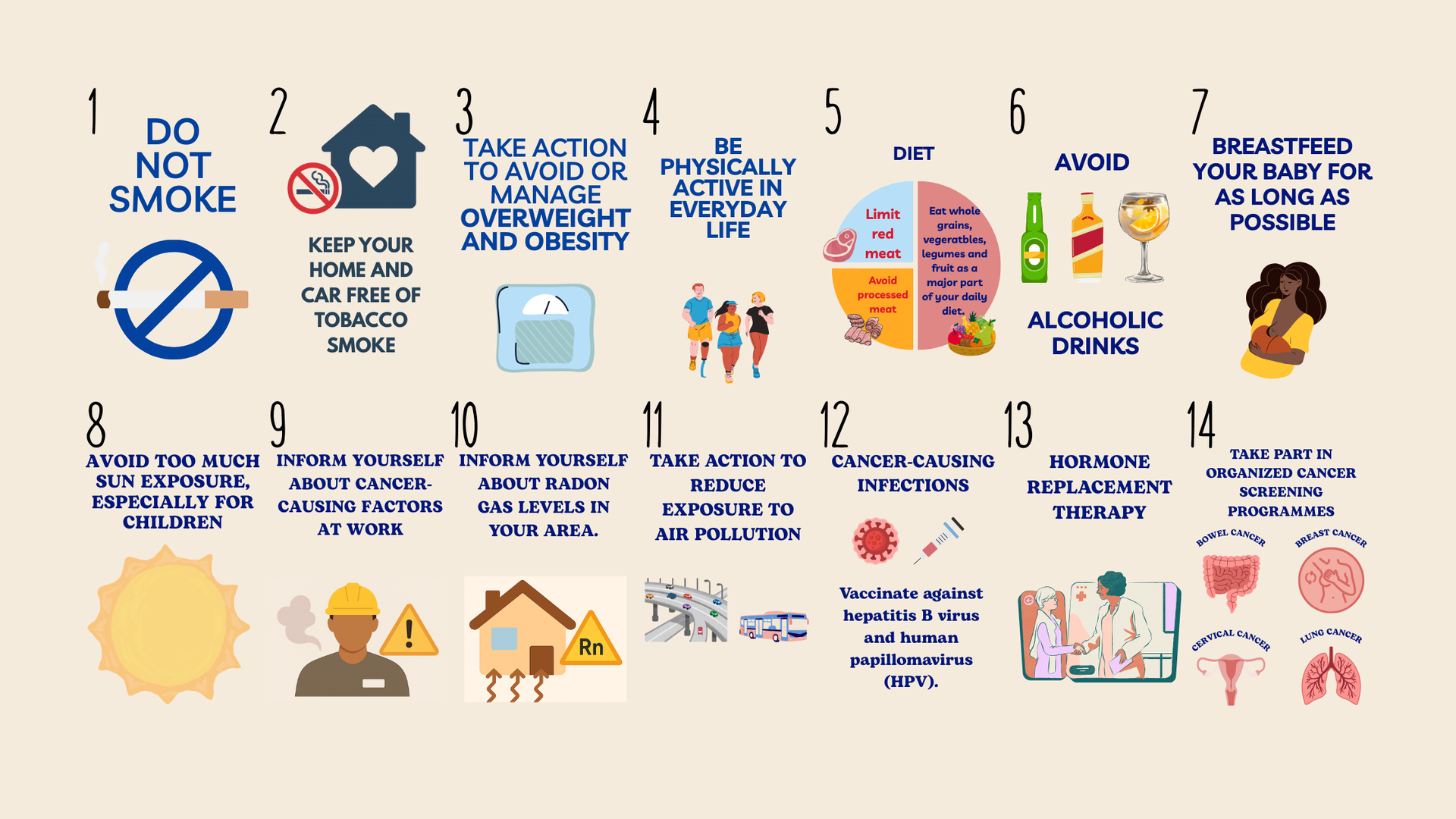
- Smoking. Do not smoke. Do not use any form of tobacco, or vaping products. If you smoke, you should quit.
- Exposure to other people’s tobacco smoke. Keep your home and car free of tobacco smoke.
- Overweight and obesity. Take action to avoid or manage overweight and obesity:
a. Limit food high in calories, sugar, fat and salt.
b. Limit drinks high in sugar. Drink mostly water and unsweetened drinks.
c. Limit ultra-processed foods - Physical activity. Be physically active in everyday life. Limit the time you spend sitting.
- Diet.
a. Eat whole grains, vegetables, legumes, and fruits as a major part of your daily diet.
b. Limit red meat, and avoid processed meat. - Alcohol. Avoid alcoholic drinks.
- Breastfeeding. Breastfeed your baby for as long as possible.
- Sun exposure.
a. Avoid too much sun exposure, especially for children.
b. Use sun protection.
c. Never use sunbeds. - Cancer-causing factors at work. Inform yourself about cancer-causing factors at work, and call on your employer to protect you against them. Always follow health and safety instructions at your workplace.
- Indoor radon gas. Inform yourself about radon gas levels in your area by checking a local radon map. Seek professional help to measure levels in your home and, if necessary, reduce them.
- Air pollution. Take action to reduce exposure to air pollution by:
a. Using public transportation, and walking or cycling instead of using a car
b. Choosing low-traffic routes when walking, cycling, or exercising
c. Keeping your home free of smoke by not burning materials such as coal or wood
d. Supporting policies that improve air quality. - Cancer-causing infections.
a. Vaccinate girls and boys against hepatitis B virus and human papillomavirus (HPV) at the age recommended in your country.
b. Take part in testing and treatment for hepatitis B and C viruses, human immunodeficiency virus (HIV), and Helicobacter pylori, as recommended in your country. - Hormone replacement therapy. If you decide to use hormone replacement therapy (for menopausal symptoms) after a thorough discussion with your health-care professional, limit its use to the shortest duration possible.
- Organized cancer screening programmes. Take part in organized cancer screening programmes, as recommended in your country, for:
a. Bowel cancer
b. Breast cancer
c. Cervical cancer
d. Lung cancer.
It is estimated that almost half of all deaths due to cancer in Europe could be avoided if everyone followed these recommendations.
If you want to learn more about the code or any of the recommendations, check out this link.