September is Childhood Cancer Awareness Month—a time to recognize children and young people affected by cancer, their families and survivors.
But awareness should lead to something more: advocacy.
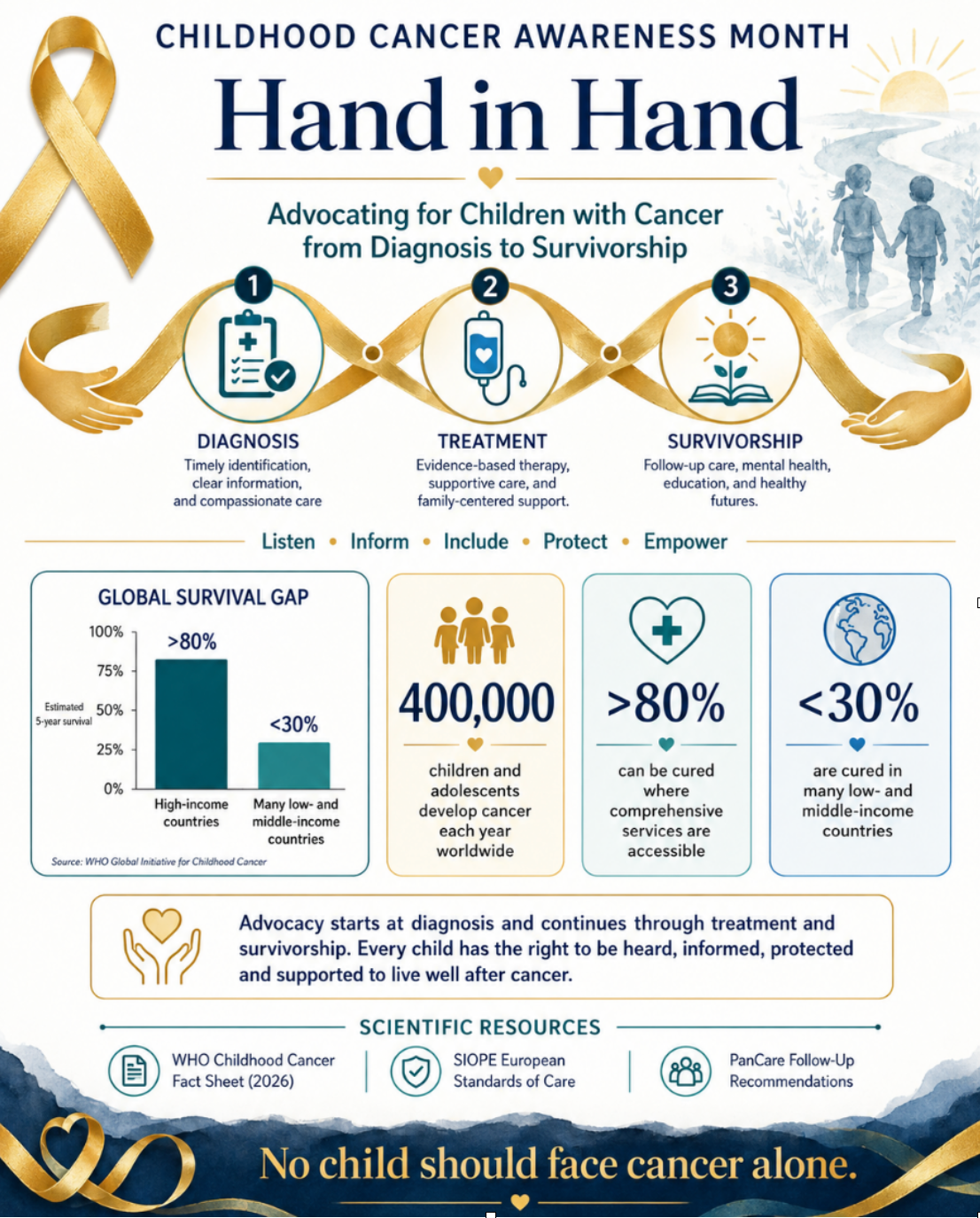
Each year, an estimated 400,000 children and adolescents develop cancer worldwide. While more than 80% of children with cancer can be cured in high-income countries, survival remains below 30% in many low- and middle-income countries.
Behind every number is a child with a voice, fears, hopes and rights.
For nurses, advocacy begins with an important question:
Are we caring only for the cancer or are we also making sure the child is heard throughout the cancer journey?
Advocacy begins at diagnosis
A cancer diagnosis brings unfamiliar language, procedures and uncertainty. Although communication often focuses on parents, children should remain active participants in their own care.
Advocacy can mean explaining cancer in age-appropriate language, asking what the child understands and ensuring that conversations happen not only around the child, but also with the child.
During treatment: listening to the child's voice
Treatment may bring pain, fatigue, fear, changes in appearance and separation from everyday life.
Children may experience these challenges differently from parents or healthcare professionals. Listening directly to them is therefore essential.
For pediatric oncology nurses, advocacy includes recognizing distress, seeking the child's own symptom reports, preparing them for procedures, protecting dignity and supporting age-appropriate involvement in decisions.
Advocacy does not always mean speaking for children.
Sometimes it means creating the space for them to speak for themselves.
Beyond treatment: advocacy continues
The end of treatment is an important milestone, but it is not the end of the cancer experience.
Survivors may face late effects, educational and psychosocial challenges, fear of recurrence and difficulties returning to everyday life.
Our responsibility therefore extends beyond helping children survive cancer.
We must also advocate for their right to live well after cancer.
Long-term follow-up, survivorship care, psychosocial support and education about future health needs are essential. Over time, children and young people should be empowered to understand their own health history and participate confidently in decisions about their future care.
Hand in hand
Nurses are present across the cancer continuum—from diagnosis and treatment to recovery and survivorship.
This gives us a unique opportunity to listen, inform, include, protect and empower.
This September, as we raise awareness of childhood cancer, we can also make a commitment:
To walk hand in hand with every child affected by cancer and to ensure that their voice remains part of every stage of care and every future we help them build.